
By Enrico Bonardo
When following trends leads to uniformity, even a cauliflower can become an act of creativity.
Enough with pistachios, stracciatella and burrata! A provocation, of course. These are excellent products that express places and culinary traditions. The problem begins when we use them simply because everyone else does.
Many pizzeria menus now offer variations on the same vocabulary: mortadella, pistachios, burrata, stracciatella, ’nduja, creams, mayonnaises, crumbles and glazes. The pizza’s name, city and creator may change, but the ingredients and combinations look increasingly alike.
Ordering trends reflect this picture, while the Margherita remains a firm favourite. We should therefore ask whether consumers always seek innovation, or whether professionals sometimes pursue it themselves.
The pizza world is following paths already explored by fine dining: influences, experimentation, new textures and striking presentation. Yet cooking has rediscovered produce, memory, vegetables, seasonality and a sense of place, putting technique at the service of an identity.
Pizza has evolved quickly too. The rediscovery of dough and ingredients was followed by creams, sauces, fermentation, crunchy elements and elaborate constructions. All of this is interesting when there is thought behind it. But when complexity becomes a set formula, with five, six or ten ingredients, one question remains: what story is this pizza trying to tell?
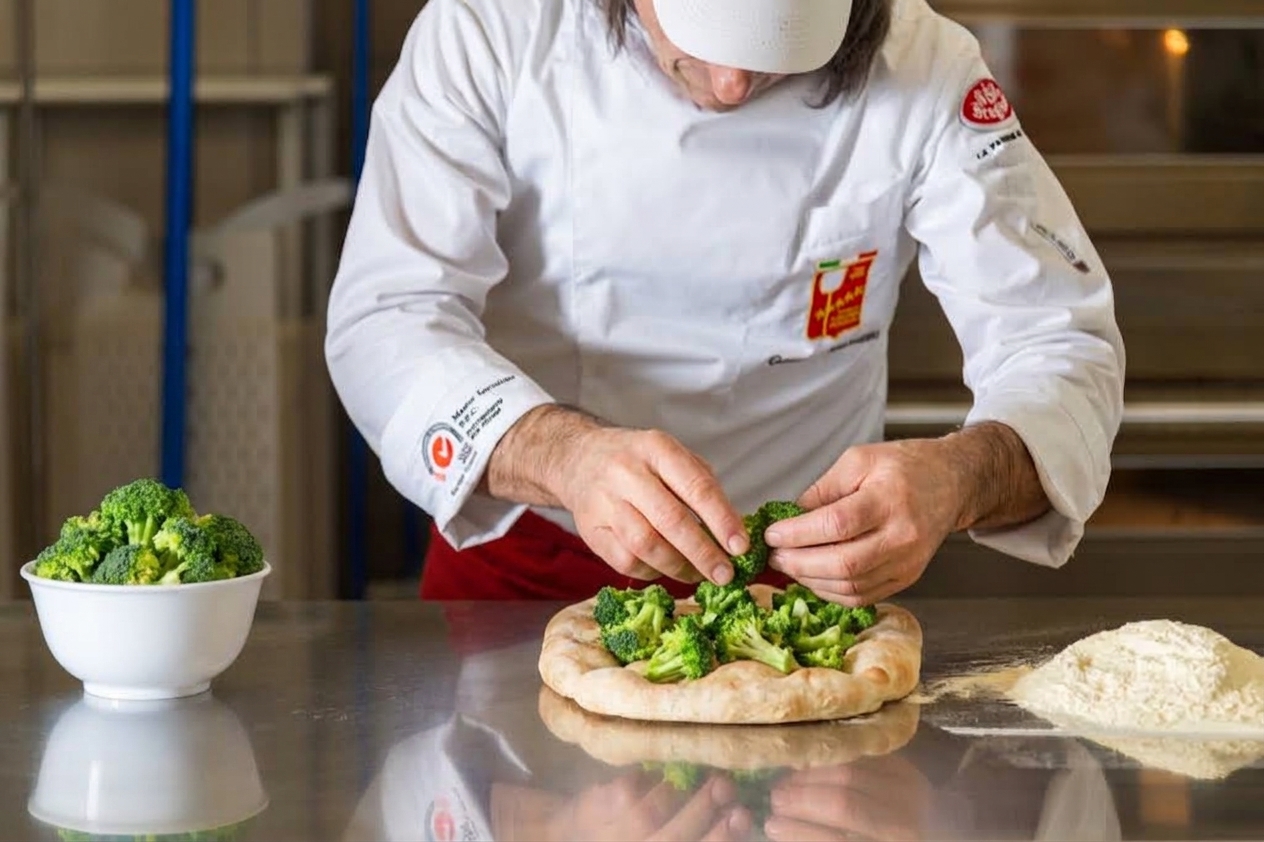
Perhaps we need fewer “essential” ingredients and a little more broccoli. Broccoli and cauliflower are everyday produce, tied to home cooking and the seasons. That is precisely why they require thought. They can be roasted, puréed, fermented and paired with savoury, acidic, spicy or smoky notes.
A cauliflower can take centre stage without caviar or truffle. Adding an expensive ingredient may suggest value; creating value from a simple ingredient requires technical skill.
What matters is personal interpretation. Uniformity goes beyond ingredients: we take photos in the same way, make similar videos, use the same words and follow the same trends. We risk making products that are recognisable and commercially appealing, but increasingly impersonal.
Taking inspiration from others is natural. Cooking evolves through exchanges and shared ideas. But inspiration means turning an idea into something of your own. Perhaps we do not need new ingredients, but a fresh look at those we have always had.
So bring back broccoli, cauliflower, cabbage, onions, root vegetables and seasonal produce. A pizza should say something about the person who makes it and the place it comes from.
The next pizza revolution may be about finding something personal to say again.
Enrico Bonardo
Sales and marketing director
Scuola Italiana Pizzaioli